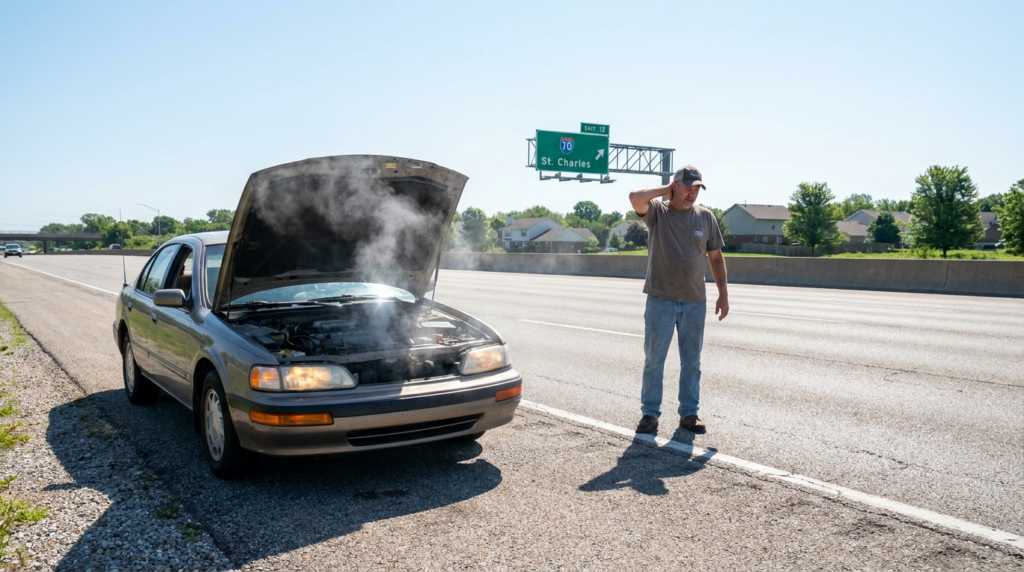
Car overheating in summer is one of the most common reasons drivers end up on the shoulder during the hottest months of the year. Between triple-digit pavement temperatures, stop-and-go traffic, and an air conditioner working overtime, your engine’s cooling system has to work harder in July and August than at almost any other time of year. Understanding why it happens is the first step to avoiding it.
Why Cars Overheat in Summer
The most frequent causes we see are low or old coolant that can no longer absorb heat effectively, a radiator or hoses clogged with debris or corrosion, a failing water pump that stops circulating coolant properly, and worn serpentine belts that drive the cooling fan and water pump. Heavy traffic makes all of these worse, since idling for long stretches gives the engine less airflow to help cool itself.
Warning Signs Before It Happens
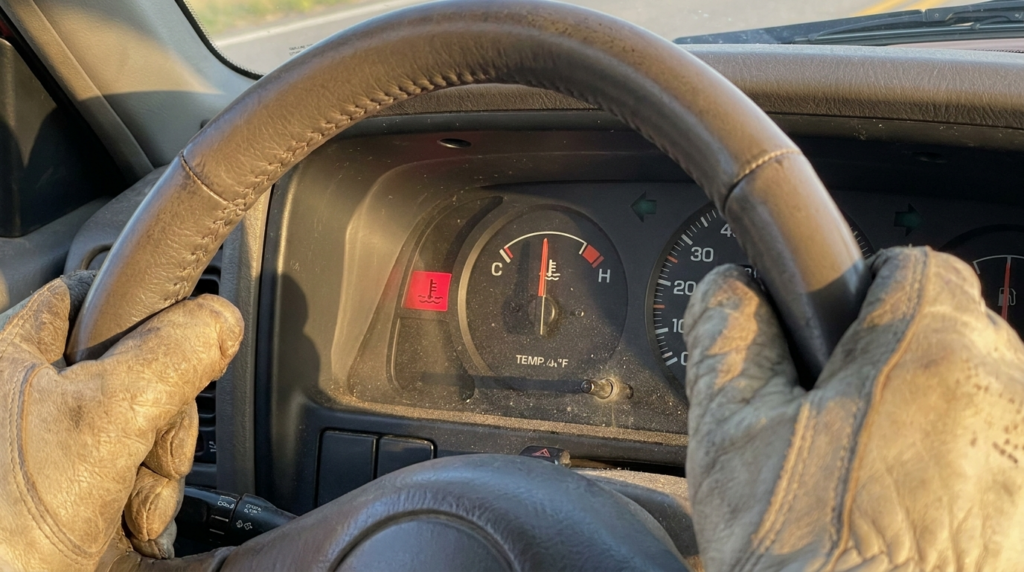
Most overheating events give some warning before the engine actually overheats. Watch for the temperature gauge climbing toward the red zone, a dashboard warning light, a sweet smell (a sign of leaking coolant), or the heater blowing warm air even with the AC on — that last one is often an early sign coolant levels are low. Catching these signs early can mean the difference between pulling over safely and being stranded.
What to Do If Your Car Overheats While Driving
- Turn off the air conditioning immediately — it puts extra load on the engine.
- Turn the heater on full blast. It sounds uncomfortable, but it pulls heat away from the engine and toward the cabin.
- Pull over as soon as it is safe to do so and shut off the engine.
- Do not open the radiator cap or coolant reservoir while the engine is hot — pressurized steam and coolant can cause serious burns.
- Wait at least 15-30 minutes for the engine to cool before checking fluid levels or restarting.
If the temperature gauge does not come back down, or you notice a large coolant leak, that is the point to call for help rather than attempt to keep driving. Continuing to drive an overheated engine risks warping the cylinder head or blowing a head gasket, turning a simple coolant top-off into a major repair.
How to Prevent Summer Overheating
- Have your coolant tested or flushed on the schedule in your owner’s manual — most vehicles need this every 2-5 years.
- Check belts and hoses for cracking or looseness before the summer heat sets in.
- Keep an eye on your temperature gauge during long highway drives or heavy traffic.
- Carry a jug of coolant and water in your trunk during summer road trips.
- Avoid unnecessary idling in extreme heat when possible.
Frequently Asked Questions
Is it safe to keep driving a short distance if my car is overheating?
No. Even a short distance on an overheated engine can cause expensive damage. Pull over as soon as it is safe rather than trying to reach a particular exit or parking lot.
Can I just add water instead of coolant in an emergency?
Plain water can work as a temporary emergency measure to get you off the road, but it does not protect against corrosion or boiling the way a proper coolant mixture does. Replace it with the correct coolant as soon as possible.
How do I know if it is the radiator or something else?
Visible coolant pooling under the front of the car, a cracked radiator, or a leak you can trace to a hose all point to the cooling system itself. If there is no visible leak but the car still overheats, it is more likely the water pump, thermostat, or a cooling fan issue, which usually needs a mechanic to diagnose.
If car overheating in summer leaves you stranded anywhere in St. Charles County, 24 Hour Towing St. Charles MO is available 24/7 to get you and your vehicle to a repair shop safely. See our full range of services or contact us any time at 636-736-0686. For general vehicle safety guidance, see the National Highway Traffic Safety Administration.